What a cabinet card is
A cabinet card is a thin paper photograph glued to a thick card mount, about 4.25 x 6.5 in overall. The name comes from the idea that it was large enough to stand on a cabinet in the parlor. Cabinet cards became popular in the late 1860s and were the standard studio portrait through the 1890s, fading out in the early 1900s as snapshot cameras took over.
The photograph itself is usually an albumen print, made with egg white, which gives it a warm brownish tone, or in later years a gelatin or collodion print with cooler, more neutral tones.
Cabinet card or carte de visite?
The two look alike and were made side by side, but size tells them apart.
| Carte de visite | Cabinet card | |
|---|---|---|
| Size of the mount | about 2.5 x 4 in | about 4.25 x 6.5 in |
| Most popular | 1860s and 1870s | 1870s to 1890s |
| Typical use | Traded among friends and family, collected in albums | Displayed at home, given as keepsakes |
Cartes de visite, often shortened to CDVs, are small enough to fit in a hand like a calling card, which is where the name comes from. Both are restored the same way.
Dating a cabinet card from the mount
The card mount is often the best clue to the date, before you even look at the clothing.
- Mount color. Early mounts tend to be pale and plain; later ones are often dark, such as black, maroon or deep green, with gold or silver edges.
- Corners. Square corners suggest an earlier card; rounded corners became common later.
- The photographer's imprint. The studio name and town printed on the front or back can be looked up in city directories to find the years the studio operated. Elaborate printed backs with large illustrations are typical of the 1880s.
- Edges. Scalloped or beveled gilt edges suggest the later decades of the format.
Clothing, hairstyles and the props in the studio narrow it down further. A family history society or a local library can often help date a specific studio.
Damage typical of cabinet cards
Fading and yellowing. Albumen prints fade toward a pale yellow-brown, often losing detail in faces and highlights first. Our faded photos guide explains what restoration can bring back.
Foxing. Small brown spots scattered across the print and mount, from moisture and impurities in the paper.
Silvering. A metallic sheen in dark areas of later gelatin prints.
Cracks. The photo and the stiff mount react differently to humidity, so the image cracks, especially if the card was bent. The cracked photos guide covers this in detail.
Chipped corners and edges. From decades in albums with tight slots.
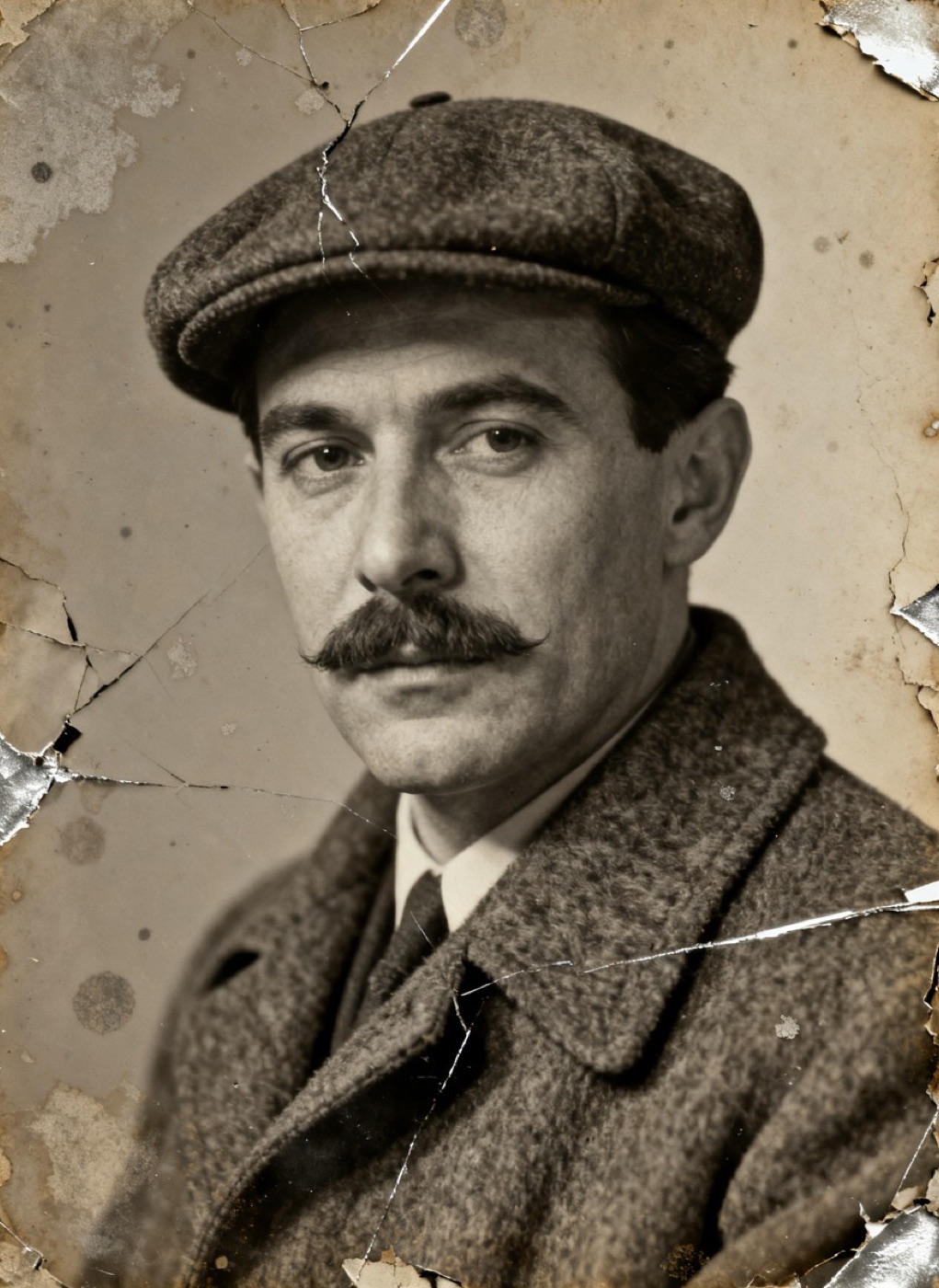
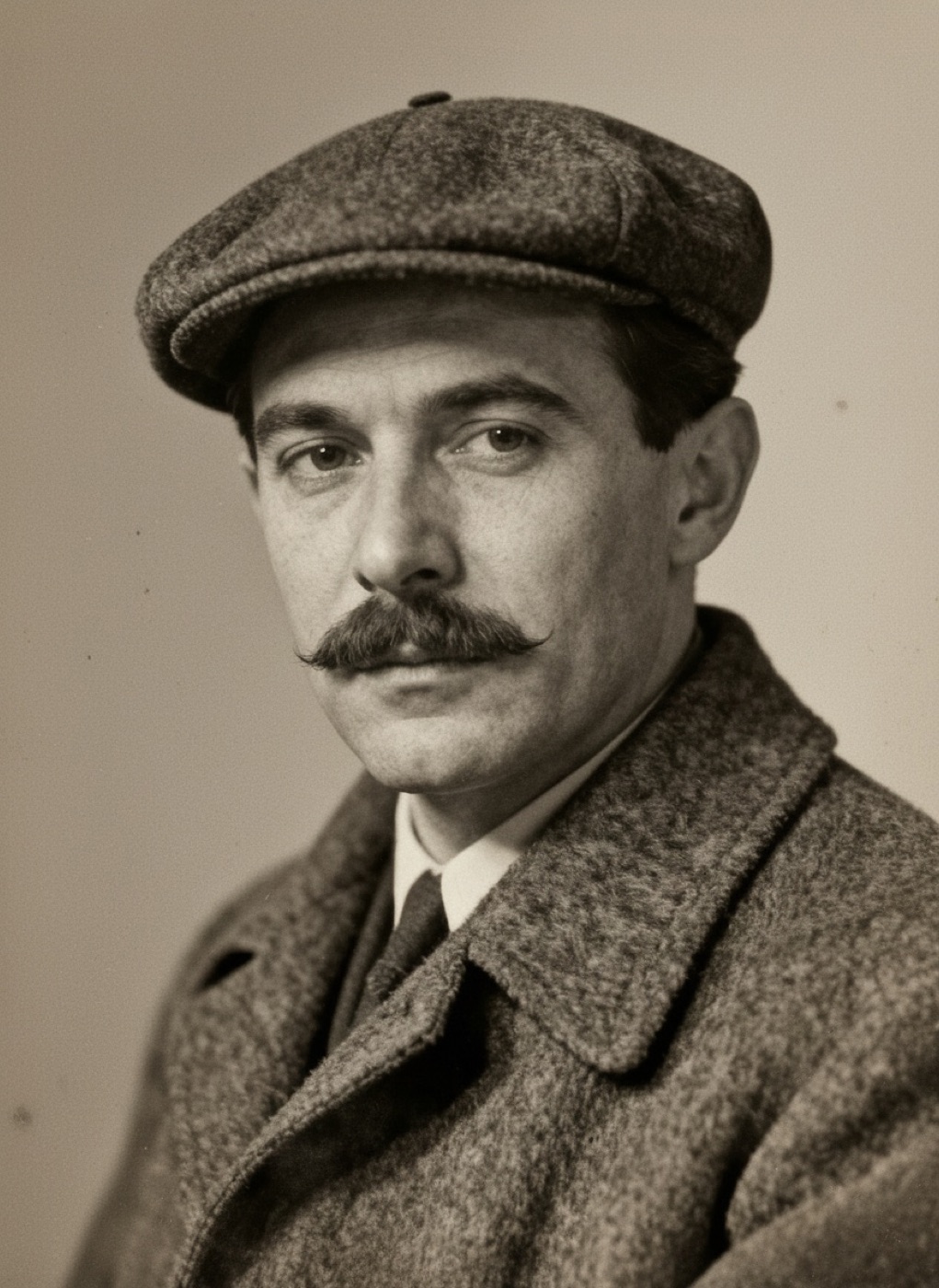
Grandpa in his flat cap, about 1934. Cracks mended. Flaked edges rebuilt. Spots removed.
The example above is a later studio portrait, from about 1934, but it shows the same kinds of damage cabinet cards suffer: deep cracks, flaked edges and spots. All of them were repaired, and the face kept exactly as it was.
Copying a cabinet card
Cabinet cards are usually flat and sturdy, which makes them easy to copy.
- Leave it in the album if it is held in a tight slot; pulling it out can tear the mount.
- Soft daylight, no flash. Albumen prints have a slight sheen.
- Phone directly above, filling the frame with the photo. You can include the mount; the restoration focuses on the photograph.
- Photograph the back too, for your own records. The studio imprint and any handwritten names are family history worth keeping, even though only the front is restored.
Restoring and reprinting
A restored cabinet card can be printed in black and white, which keeps the warm feel of the original, or with color added. Because cabinet cards are larger than tintypes and cartes de visite, a sharp copy usually prints well at 5x7 or 8x10. Each print has a clean white border around the whole photo.
Many family collections hold cabinet cards and tintypes side by side, often of the same generation. Restoring a set together, and printing them at the same size, makes a striking family history wall.
Send a scan or a phone photo of the print. See the restored result before you pay.
Restore a cabinet cardUpdated October 8, 2026