What 1940s photos look like
Mostly black and white. Color film existed, but it was expensive, and most family prints of the decade are black and white silver gelatin prints, sometimes with a warm or brownish tone.
Small snapshots. Box cameras and folding cameras produced small prints, often around 2.5 x 3.5 in or 3.5 x 4.5 in. Many were contact prints, the same size as the negative.
Deckled edges. The wavy, scalloped border associated with old photos became popular in the late 1940s and stayed common through the 1950s.
Studio portraits. Formal portraits for weddings, graduations and military service were taken in studios, printed larger, often 5x7 or 8x10, and sometimes mounted in a folder with the studio's name embossed on the front.
Dates on the back. Some photofinishers printed the month and year on the border or the back. Handwritten notes on the back are often the best clue of all.
Wartime and military portraits
Millions of service members had a portrait taken in uniform, often more than one: one for their parents, one for a sweetheart, a small one for a wallet. These photos matter enormously to families, because they are often the only good portrait of a young person who did not come home, or who later rarely spoke about those years.
Typical problems: wallet photos are cracked and creased from years of carrying, studio portraits have faded or silvered in a frame on the wall, and small snapshots from overseas are scratched and dim. Uniform details, insignia and ribbons usually survive well enough to restore clearly.
Wedding portraits of the decade
Wartime weddings were often quick, and the portrait might be a single studio photo or a snapshot outside the church. Postwar weddings brought more formal portraits. These photos tend to be displayed for decades, which means sunlight fading and, if they were framed under glass, sometimes sticking to the glass.
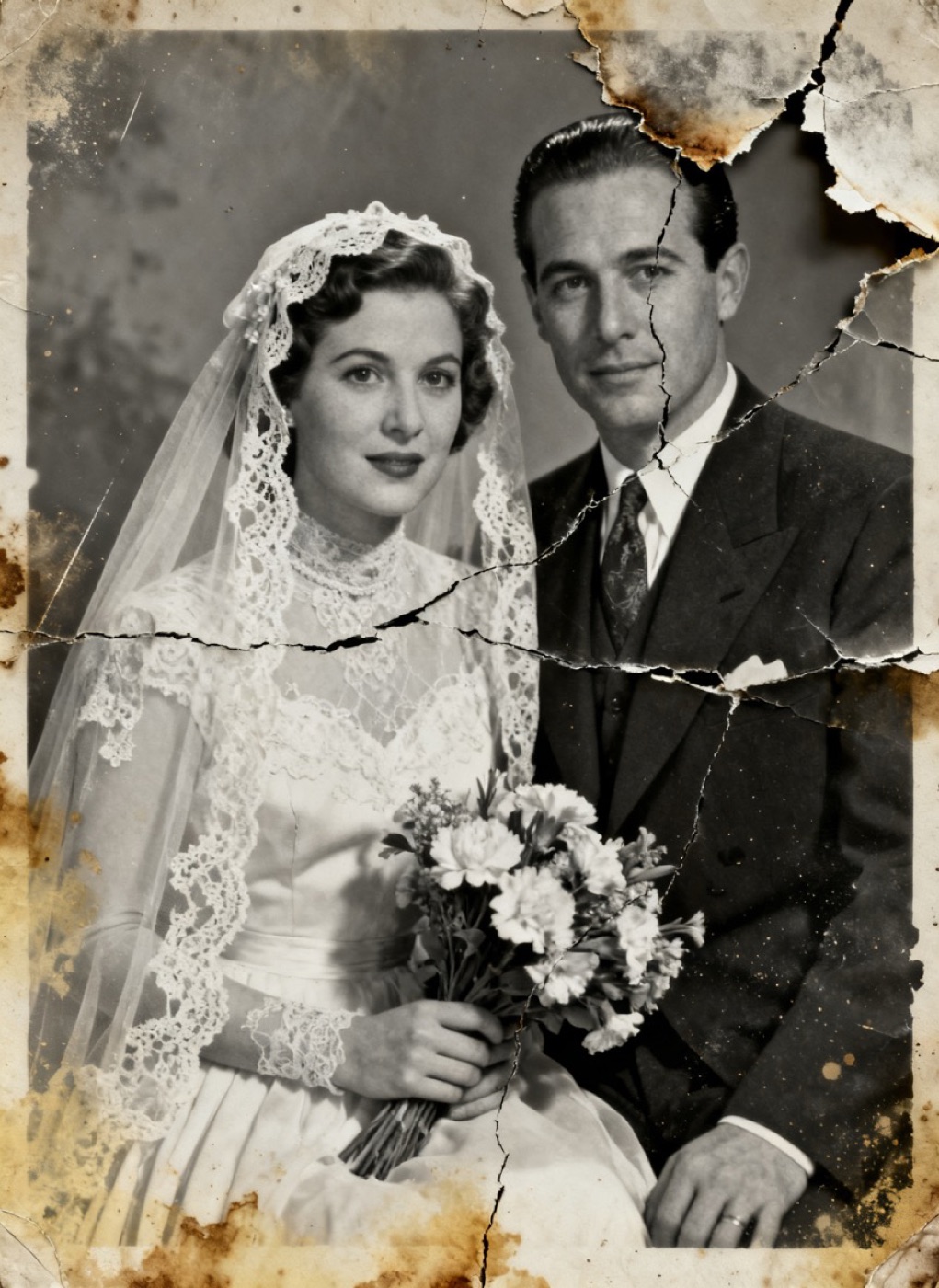
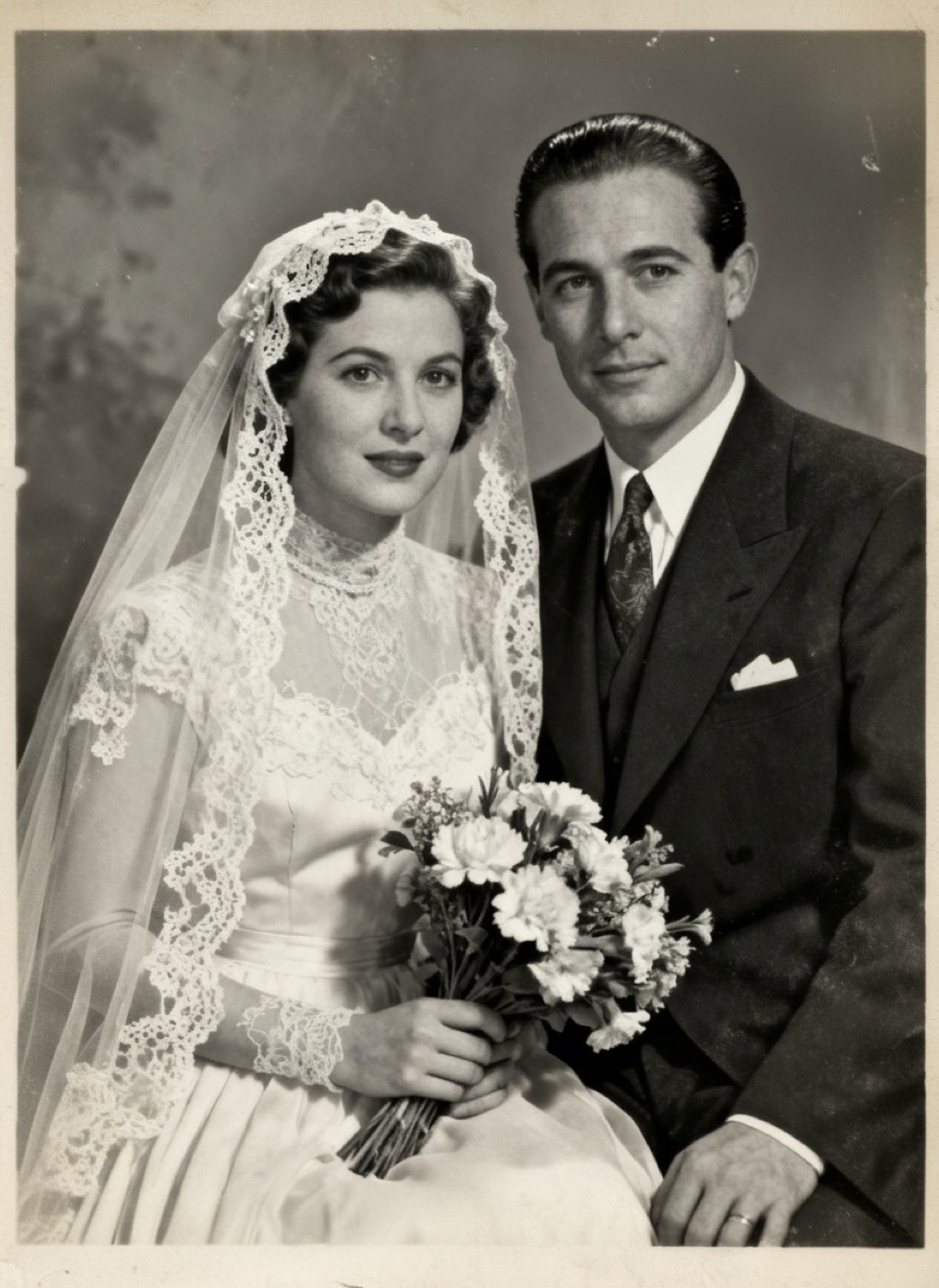
Wedding day, about 1946. Torn corner rebuilt. Cracks mended. Stains lifted.
This wedding portrait from about 1946 had a torn corner, cracks across the faces and water stains at the edges. The restored version repairs all three while keeping the couple exactly as they were. More on tears and missing corners is in our torn photos guide.
Typical damage on 1940s prints
- Silvering: a bluish metallic sheen in dark areas such as suits and hair.
- Curling: thin snapshot paper curls tightly over time.
- Creases and cracks: from wallets, letters and envelopes.
- Album damage: black paper albums of the era were acidic, and photos were held with corners or glue that stained the backs and sometimes the fronts.
- Fading and yellowing: from display and from acidic storage.
Should a 1940s photo be colorized?
That depends on the photo and the family. A formal portrait often looks best restored in black and white, as it was meant to be seen. A snapshot of everyday life can feel much closer in color. Both are included; you preview them before you choose. Our colorizing guide explains how the colors are chosen and how to ask for colors you know, like the color of a dress or a pair of eyes.
Copying small 1940s snapshots
Small prints need a sharp copy so they can be printed larger.
- Flatten curled snapshots gently between clean paper under a book for a day. Do not force a cracked print flat.
- Use soft daylight, no flash, phone directly above.
- Fill the frame with the photo, and keep the deckled edge in view so nothing important is cut off.
- For a flatbed scanner, scan small snapshots at a high resolution so they can be enlarged. Our scanning guide gives numbers.
Prints for the whole family
A restored 1940s portrait is often wanted by every branch of the family. You can order up to 50 copies in one order, in 5x7, 8x10 or 8x12, on lustre or glossy paper, with a clean white border around the whole photo. All copies arrive together, each in its own protective sleeve.
Send a scan or a phone photo of the print. See the restored result before you pay.
Restore a 1940s photoUpdated October 8, 2026